 440-965-4332
 Give us a Review

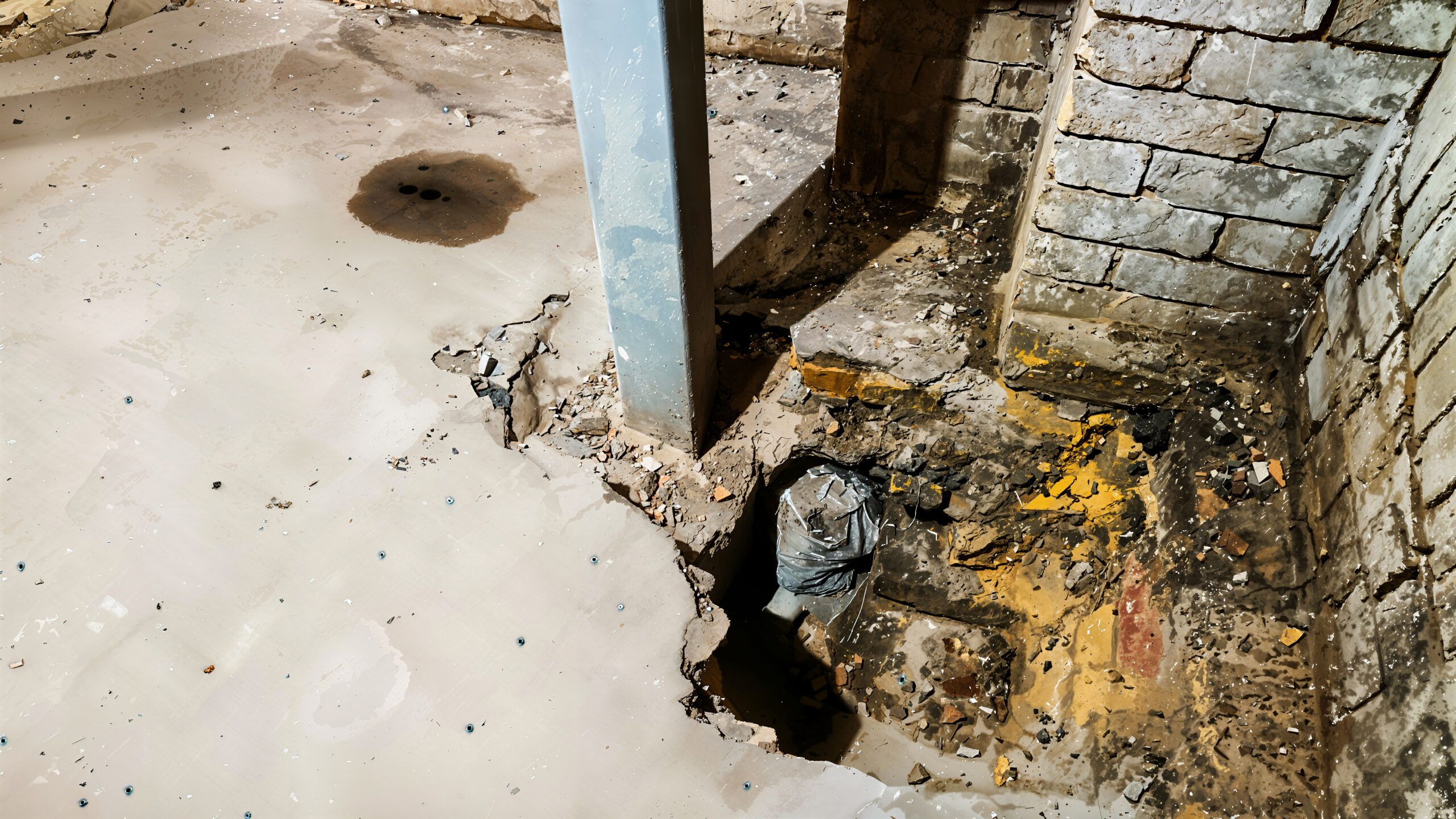
A Sideways Crack Can Tell You More Than Its Width
A crack that runs sideways across a basement wall can raise an immediate question: Is this just a crack, or is the wall itself moving? Horizontal cracks in basement wall areas deserve attention because the pattern can be associated with pressure acting against the foundation, particularly when the wall is also bowing or shifting inward.
The crack is only one part of what needs to be understood. Its location, the type of foundation, changes in the wall, and any visible movement provide a clearer picture of what may be happening.
What Causes Horizontal Cracks in Basement Walls?
Basement walls have to hold back the soil surrounding the foundation. The sideways force placed on the wall is referred to as lateral soil pressure(opens in new tab).
Conditions outside the foundation can affect how much stress the wall experiences. Soil type, moisture, drainage, and changes in the ground around the home can all play a role. When the wall can no longer resist those forces without changing, cracking, or inward movement may become visible.
A horizontal foundation crack can therefore be a symptom of stress on the wall rather than simply a break in its surface.
Water may also be present, but cracking and seepage are not automatically the same problem. If you are seeing water along with the crack, our guide to hydrostatic pressure in basements explains why groundwater can find its way through below-grade foundations.
Is a Horizontal Crack in a Basement Wall Dangerous?
Homeowners often ask, “Is a horizontal crack in a basement wall dangerous?” The answer depends on more than the direction of the crack. The condition of the wall, including any bowing, displacement, or ongoing movement, is what helps determine how serious the problem may be.
What matters is what is happening to the wall around it.
| What You Notice | What It May Tell You |
| Horizontal crack with the wall still appearing straight | The crack needs context before its significance can be determined |
| Wall curving or bulging inward | The wall has moved from its original position |
| Horizontal cracking along a block wall mortar joint | The masonry pattern may make wall movement more visible |
| One section sitting inward from another | Displacement has occurred |
| Crack becoming longer or wider | The condition has changed over time |
| Water appearing at the crack | Moisture is present in addition to the cracking |
The important point is that crack width alone does not tell the whole story. A narrow crack in a wall that has moved can be more significant than its size suggests.
Why Does Bowing Matter?
A bowing wall is a wall that has developed an inward curve. Once that happens, the concern is no longer limited to the visible crack because the foundation wall itself has changed position.
A bowing basement wall crack may look different depending on how the foundation was built. With a block wall, movement can sometimes be seen along the mortar joints. A poured concrete wall does not have those joints, so the visible pattern can be different.
Bowing also helps explain why two horizontal cracks that look similar in photographs may represent different conditions. One may be in a wall that remains straight, while the other may be accompanied by measurable inward movement.
Does Water Coming Through the Crack Mean Water Caused It?
Not necessarily.
Water entering through a crack tells you that moisture has found a path through the foundation. It does not, by itself, establish why the crack formed.
This distinction is important because the foundation can have a water problem, a wall-movement problem, or both. Sealing a leaking crack may address the opening, but it does not provide structural support if the wall has moved.
If moisture is part of what you are seeing, interior basement waterproofing and exterior basement waterproofing address water from different sides of the foundation.
How Is a Horizontal Basement Wall Crack Evaluated?
An evaluation should look beyond the crack itself.
The condition of the foundation becomes clearer by considering:
- whether the wall remains straight
- where the crack is located
- whether the crack has changed
- whether any part of the wall has shifted inward
- whether the foundation is poured concrete or a block wall
- whether other cracks are present
- whether water is entering in the same area
Older photographs can also be useful if they show whether the crack or wall has changed over time.
This is why diagnosing a horizontal crack from a photograph alone has limitations. A photo shows the surface. It does not establish the wall’s overall alignment or what is happening around the foundation.
How Do You Fix a Horizontal Basement Wall Crack?
There is no single way to fix a horizontal basement wall crack because the repair depends on what the evaluation finds.
If the wall remains stable, the issue may be different from a foundation that has bowed inward. When movement is present, repair may involve stabilizing or reinforcing the wall rather than simply filling the crack.
Carbon fiber is one type of reinforcement used in some foundation-wall repair applications. It is not a universal solution for horizontal cracking, and its suitability depends on the condition of the wall. Other foundation conditions may require a different repair approach.
The important distinction is simple: the crack does not determine the repair by itself. The condition of the wall does.
When Should You Have a Horizontal Crack Checked?
A horizontal crack is worth having evaluated when you cannot tell whether the wall has moved. Certain changes make that evaluation more important, including visible bowing, displacement, new cracking nearby, or a crack that has continued to change.
You also do not need to wait for the crack to leak. A dry crack can still be associated with wall movement, just as a leaking crack is not automatically evidence that the wall is structurally unstable.
For homeowners in North Central and Northeast Ohio, understanding the wall condition first can help separate a foundation concern from a waterproofing concern before any repair is considered.
Found a horizontal crack in your basement wall? Call 440-965-4332 or contact Daniel’s Waterproofing for a free inspection and estimate.
Horizontal Basement Wall Crack FAQs
Can I repair a horizontal basement wall crack myself?
Crack fillers and sealants are available for homeowner use, but they only treat the opening. They cannot establish whether the foundation wall has moved or whether structural reinforcement is needed. Before attempting a DIY repair, have the wall evaluated so you know what you are actually trying to fix.
How much does it cost to repair a horizontal foundation crack?
On average, foundation crack repairs can range from about $250 to $800 for a basic crack repair, while structural repairs for a bowing basement wall can range from approximately $4,000 to $15,000 or more. The actual cost depends on how much the wall has moved, the length of the affected area, the foundation type, and the repair method required.
These are general U.S. price ranges, not Daniel’s Waterproofing pricing. A foundation inspection is needed to determine the actual repair and cost for a specific home.
Do I need a structural engineer for a horizontal foundation crack?
Not necessarily. A foundation professional can evaluate many basement wall problems. A structural engineer may be appropriate when there is significant or unusual movement, the structural condition is uncertain, or you want an independent engineering opinion before deciding on a repair.
Does homeowners insurance cover horizontal foundation cracks?
It depends on what caused the damage and the terms of your policy. Foundation damage associated with gradual movement or maintenance-related conditions may be treated differently from damage caused by a covered event. Ask your insurer to review the specific cause rather than assuming the crack is either covered or excluded.
Should I buy a house with a horizontal foundation crack?
A horizontal crack does not automatically mean you should walk away from the home, but it does give you something important to investigate before buying. Find out whether the wall has moved, whether repairs have already been completed, and whether inspection reports, repair records, or warranty documentation are available.
Can I finish my basement if there is a horizontal crack in the wall?
Have the foundation condition evaluated before covering the wall with framing, insulation, or drywall. Finishing the basement first can hide future changes and make the foundation harder to access if repair becomes necessary.
How can I tell if an old horizontal foundation crack has already been repaired?
Look for visible patching, reinforcement, anchors, braces, or other previous work, but appearance alone may not tell you what was repaired or why. If you bought the home with existing foundation work, check for contractor invoices, inspection reports, permits where applicable, and warranty documentation. If the history is unclear, an inspection can help establish the wall’s current condition.
A Horizontal Crack Deserves More Than a Surface Fix
A horizontal crack in a basement wall is something to investigate, not a diagnosis by itself. Whether the wall has moved, how the crack has changed, and how the foundation was built provide the information needed to understand what you are seeing.
Family-owned since 1978, Daniel’s Waterproofing has completed more than 20,000 basement and foundation projects across North Central and Northeast Ohio. Work is completed by experienced in-house crews, never subcontractors; waterproofing work is backed by a lifetime warranty, and Daniel’s maintains an A+ rating from the Better Business Bureau(opens in new tab).
Call 440-965-4332 or contact us for a free inspection and estimate.