 440-965-4332
 Give us a Review

What Efflorescence on Basement Walls Can Tell You About Moisture
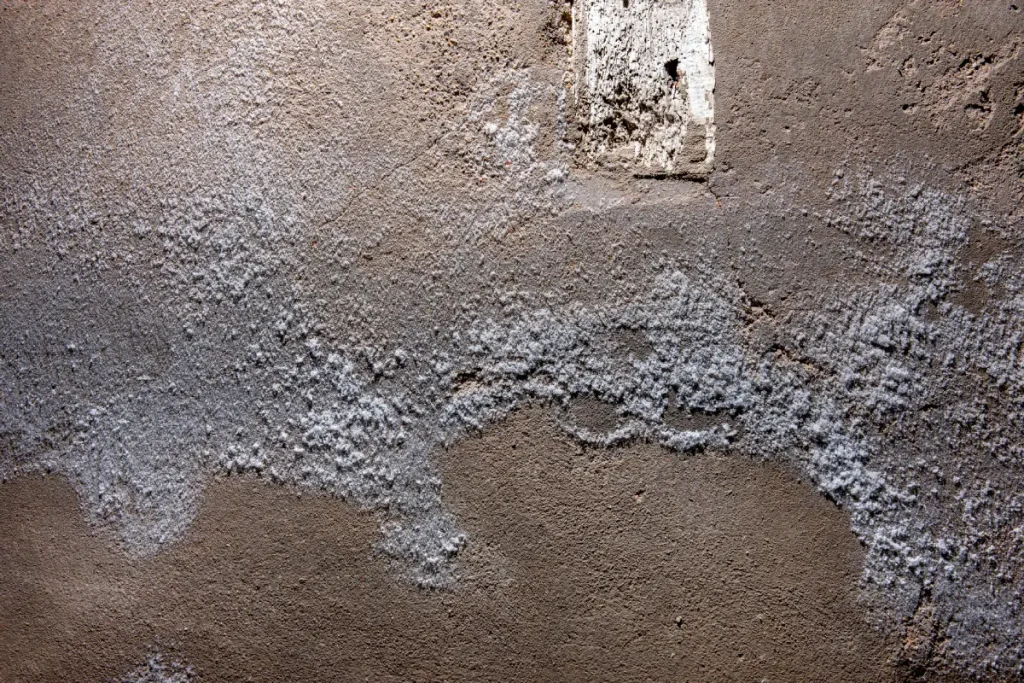
White, chalky residue across a foundation wall can look alarming, especially when it seems to appear after wet weather. Efflorescence(opens in new tab) on basement walls forms when moisture moves through concrete or masonry, carries dissolved mineral salts to the surface, and then evaporates. The water disappears, but the salts remain behind.
The residue itself is not the same as mold, and brushing it away may clean the wall temporarily. What matters more is why enough moisture is moving through the foundation for the deposits to form in the first place.
What Causes Efflorescence on Basement Walls?
To understand what causes efflorescence, it helps to look at what is happening inside the foundation material rather than only at the white deposit on its surface.
Concrete and masonry contain pores that can allow moisture to move through them. When water encounters soluble salts within the masonry, it can carry those salts toward the exposed surface. Once the water evaporates, the salts crystallize and become visible.
Three things are therefore involved:
- Water or moisture moving through the material
- Soluble mineral salts
- A surface where the moisture can evaporate
This is why efflorescence is often better treated as evidence of moisture movement than as a problem limited to the appearance of the wall.
Why Is There White Powder on My Basement Walls?
A white powder on basement walls is commonly associated with efflorescence, particularly when it appears on concrete, brick, mortar, or concrete block.
Efflorescence may look powdery, chalky, or crystalline. It can appear in patches, along mortar joints, or across larger portions of a masonry wall.
Appearance alone, however, should not be used to identify every white substance in a basement. Paint residue, deposits from other materials, and biological growth can look different under varying conditions. If the material cannot be identified confidently, the surrounding moisture conditions and the surface it is growing or forming on provide useful context.
Why Concrete Block Walls Can Show Efflorescence
A concrete block foundation is made up of individual masonry units connected by mortar joints. Moisture can move through the block, mortar, or joints depending on conditions outside the foundation.
Because concrete block is porous, moisture reaching the wall can migrate toward the interior surface. As it evaporates, salts carried through the masonry may be deposited on the face of the block.
The location of the residue can provide clues. Deposits concentrated near the bottom of the wall, around mortar joints, or in areas that become damp after rain may warrant a closer look at how water is reaching that section of the foundation.
Efflorescence does not, by itself, identify the exact source. Exterior drainage, groundwater, cracks, and other site conditions may all need to be considered.
Efflorescence vs. Mold: How Can You Tell the Difference?
Efflorescence vs. mold(opens in new tab) is an important distinction because the two are not the same material and do not call for the same response.
| Efflorescence | Mold |
| Consists of mineral deposits | Is biological growth |
| Commonly develops on masonry | Can grow on suitable damp organic materials |
| Often appears white, chalky, or crystalline | Can vary considerably in color and appearance |
| Results from salts left behind as moisture evaporates | Requires conditions that support biological growth |
| Can often be brushed from a masonry surface | Should not be identified by color alone |
White material on a foundation wall should not automatically be called mold simply because moisture is present. Likewise, a white deposit should not automatically be assumed to be efflorescence without considering the surface and surrounding conditions.
If there are health concerns related to suspected mold or indoor air conditions, those concerns should be discussed with a healthcare professional.
How to Remove Efflorescence From Basement Walls
For homeowners researching how to remove efflorescence from basement walls, cleaning the deposit and correcting the moisture condition should be treated as two separate tasks.
If the wall is dry and the material has been identified as efflorescence, loose mineral deposits can often be removed from masonry with a stiff, dry brush. The residue should be collected rather than simply spread through the basement.
More stubborn deposits may require a cleaning product intended for the specific masonry surface. Product directions and safety requirements should be followed carefully, particularly with masonry cleaners that contain acids or other strong ingredients.
Removing the visible salts improves the wall’s appearance. It does not stop new deposits from forming if moisture continues moving through the foundation.
Will a Masonry Sealer Stop Efflorescence?
A masonry sealer may be appropriate for certain masonry applications, but it should not be treated as a universal solution for recurring efflorescence.
If water is reaching the wall from the surrounding soil, sealing the interior surface does not necessarily correct the condition on the other side of the foundation. Moisture may continue to reach the masonry even if its path to the interior surface changes.
Before coating or sealing a basement wall, determine why the wall is damp. A sealer selected for the wrong condition can cover the evidence without addressing the water responsible for it.
When Efflorescence Points to a Larger Moisture Problem
A small, isolated deposit on an otherwise dry wall is different from white residue that repeatedly returns alongside dampness or active seepage.
Pay closer attention when efflorescence appears with:
- Damp foundation walls
- Water staining
- Seepage after rain
- Wet mortar joints
- Water along the wall-floor joint
- Recurring deposits after previous cleaning
- Cracks that are also allowing water into the basement
These conditions can indicate ongoing moisture intrusion rather than an old deposit left from a previous wet period.
The goal is not simply to keep cleaning the wall. If moisture continues reaching the foundation, the water path needs to be identified.
How Is the Moisture Behind Recurring Efflorescence Addressed?
There is no single waterproofing repair specifically for efflorescence because the mineral deposit is the result of moisture movement, not the source of it.
If surface water is being directed toward the foundation, gutters, downspouts, and grading may need attention. A leaking crack may require a localized repair. When groundwater is reaching the foundation or entering near the basement perimeter, a drainage-based waterproofing approach may be appropriate.
The right method depends on the foundation, where the moisture is coming from, and how it is moving into or through the basement.
This distinction matters. Cleaning treats the residue. Waterproofing addresses the water condition contributing to it.
CTA: White residue returning on damp basement walls? Call 440-965-4332 or contact Daniel’s Waterproofing for a free inspection and estimate.
Efflorescence FAQs for Ohio Homeowners
Does efflorescence mean there is water behind my basement wall?
It means moisture has moved through the masonry, but it does not necessarily mean water is currently collecting behind the wall. Older efflorescence on basement walls can remain after the masonry dries. Fresh deposits that continue to develop, especially with dampness or staining, are more useful signs that moisture movement may still be active.
Is efflorescence a sign of a foundation problem?
Not by itself. Efflorescence indicates moisture movement and mineral salts in the masonry, not structural failure. Cracks, bowing, displacement, deteriorating mortar, or other changes in the foundation should be evaluated on their own rather than assuming the white residue caused them.
Is efflorescence dangerous or toxic?
Efflorescence is a mineral deposit, not a toxic biological growth. The bigger question is whether the white material has actually been identified as efflorescence. When the substance is uncertain, particularly in a damp basement, it should not be identified from color alone.
Can I paint over efflorescence on basement walls?
Not without first dealing with the deposit and understanding the moisture condition behind it. Painting over white powder on basement walls can hide the residue temporarily, but new salts may reach the surface if moisture continues moving through the masonry. Surface preparation should also follow the coating manufacturer’s instructions.
Does efflorescence lower the value of a home?
There is no standard amount by which efflorescence affects home value. During a sale or inspection, however, visible deposits may raise questions about past or current basement moisture. Identifying whether the wall is currently damp and addressing any active water problem provides more useful information than simply covering the residue.
Should efflorescence be removed before finishing a basement?
Yes, the residue and the reason it formed should be addressed before the foundation wall is concealed. Finishing over an unresolved moisture intrusion problem can hide future warning signs and make the foundation surface harder to inspect if dampness returns.
Can efflorescence appear on a basement floor as well as the walls?
Yes. Efflorescence can develop on concrete floors when moisture carrying dissolved mineral salts moves through the slab and evaporates at the surface. White deposits on the floor can therefore point to moisture movement from beneath the slab, not just water entering through a foundation wall.
Should I worry about efflorescence found during a home inspection in Ohio?
Efflorescence deserves further attention, but its presence alone does not establish an active leak or structural problem. For an Ohio home, the useful next step is determining whether the deposit is old or recurring and looking for accompanying dampness, staining, seepage, or other foundation conditions before deciding whether waterproofing work is needed.
Stop the Moisture, Not Just the White Residue
Recurring efflorescence on basement walls is worth looking beyond the surface. Cleaning removes the visible mineral salts, but when dampness or seepage continues, the moisture reaching the foundation also needs attention.
Family-owned since 1978, Daniel’s Waterproofing has completed more than 20,000 basement and foundation projects across North Central and Northeast Ohio. Our experienced in-house crews, never subcontractors, complete the work, and Daniel’s maintains an A+ rating from the Better Business Bureau(opens in new tab).
Call 440-965-4332 or contact us online for a free inspection and estimate.