 440-965-4332
 Give us a Review

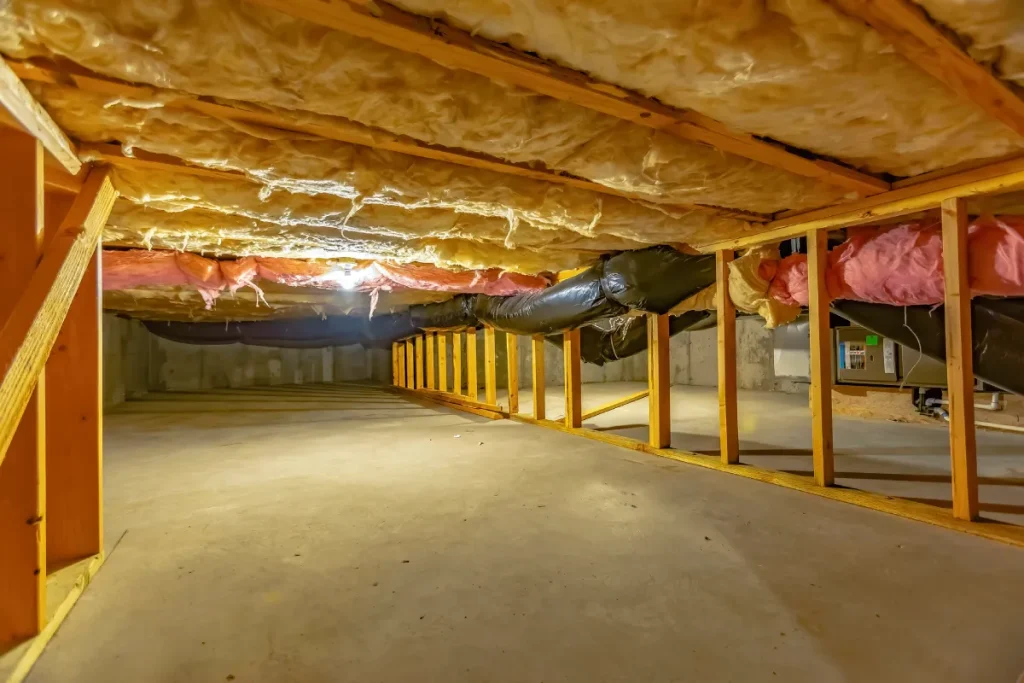
How much does crawl space encapsulation cost in 2026? For most Ohio homes, professional crawl space encapsulation typically ranges from a few thousand dollars to the low five figures. The price is driven by square footage, vapor barrier thickness, drainage needs, and whether a dehumidifier is added. Exact pricing depends on your home, so request an on-site quote.
Why This Matters for Ohio Homeowners
Encapsulation cost is not a single national number, because it tracks local climate and housing conditions. North Central and Northeast Ohio combine a humid continental climate, cold winters, and a large share of older homes, which is exactly the mix that pushes crawl space moisture problems, and the cost to solve them, higher than a dry-climate average would suggest.
Ohio’s housing stock skews old: the Ohio Housing Finance Agency reports that roughly half of the state’s housing units were built before 1965 and more than two-thirds before 1980 (Source: Ohio Housing Finance Agency). Older vented crawl spaces in that housing are prone to ground moisture, condensation, and wood decay, and the annual 39 to 41 inches of area precipitation keeps soil damp for much of the year (Source: National Weather Service).
What You Are Actually Paying For
What is crawl space encapsulation?
Crawl space encapsulation is the process of sealing a crawl space against ground and air moisture using a continuous vapor barrier, sealed seams, and usually a dehumidifier or conditioned air. The U.S. Department of Energy recommends installing a 6-mil polyethylene vapor diffusion barrier across the crawl space floor to stop soil moisture from migrating up, overlapping seams and sealing the barrier several inches up the walls (Source: U.S. Department of Energy). Encapsulation turns a damp, vented space into a dry, controlled one.
What does crawl space encapsulation cost include?
A professional encapsulation quote usually bundles several line items. Understanding them helps you compare bids accurately rather than by headline price alone.
- Cleanup and prep: removing debris and old material, correcting standing water, and repairing exposed leaks before any membrane goes down.
- Vapor barrier: a reinforced polyethylene liner across the floor and up the walls; thickness and reinforcement drive cost.
- Seam and edge sealing: taping laps and sealing the barrier to walls and piers for a continuous membrane.
- Drainage and sump (if needed): an interior drain and sump pump where water intrusion is present.
- Dehumidifier or conditioned air: to hold humidity in the safe range once the space is sealed.
- Insulation (optional): rigid foam on foundation walls where a conditioned crawl space is the goal.
What Factors Affect Crawl Space Encapsulation Cost?
Two homes with the same square footage can receive very different quotes. These are the variables that move the number:
- Square footage. Larger crawl spaces use more material and labor, so cost scales with area.
- Vapor barrier thickness and quality. A thicker, reinforced liner costs more than a thin sheet but resists punctures and lasts longer.
- Existing moisture and water intrusion. Standing water or active seepage adds drainage and sump work before sealing.
- Dehumidification. Adding a sealed-crawl dehumidifier raises the price but is often what keeps humidity below 60 percent, the level the EPA links to mold control (Source: EPA).
- Access and clearance. Tight or low crawl spaces are slower and more labor-intensive to work in.
- Radon considerations. Sealing a crawl space can trap radon and other soil gases, so a radon test and, where needed, mitigation may be part of the scope (Source: ENERGY STAR).
- Insulation and conditioning. Insulating walls and conditioning the space adds material and cost but improves comfort and energy performance.
How Is Encapsulation Priced?
Contractors often quote by the square foot for the membrane portion and add fixed costs for drainage, sump, dehumidifier, and insulation.
Encapsulation Options Compared
Not every crawl space needs the full package. The table shows how scope affects both cost and results.
| Approach | What it includes | Typical result |
|---|---|---|
| Ground cover only | Loose 6-mil poly on the floor, minimal sealing | Reduces some ground moisture; not a sealed system |
| Full encapsulation | Reinforced liner on floor and walls, sealed seams, drainage as needed | Sealed, dry space; strong moisture control |
| Encapsulation + dehumidifier | Full encapsulation plus humidity control | Consistent low humidity; best odor and mold prevention |
| Conditioned crawl space | Encapsulation, insulation, and conditioned air | Highest comfort and energy benefit; highest cost |
For most older Ohio homes with musty odors or damp joists, full encapsulation with a dehumidifier is the balance point between cost and durable results.
Is Crawl Space Encapsulation Worth It in Ohio?
For homes with chronic crawl space moisture, yes. A sealed, dry crawl space protects framing from rot, discourages mold, and helps hold indoor humidity below the 60 percent threshold the EPA associates with mold and dust-mite growth (Source: EPA). Because much of the air in the living space is drawn up from below, drier crawl space air often means fewer musty odors and cleaner indoor air upstairs.
- Protects wood framing, subfloor, and insulation from moisture damage.
- Reduces the musty odors that migrate upward into living areas.
- Discourages mold and wood-destroying organisms that thrive in damp, vented crawl spaces.
- Can improve comfort and lower energy waste when the space is conditioned.
Before You Get an Encapsulation Quote: Checklist
- Note the crawl space square footage and access height so estimates are apples to apples.
- Flag any standing water, active leaks, or visible mold for the estimator.
- Ask whether a radon test is recommended before sealing (Source: EPA).
- Confirm what vapor barrier thickness and warranty are included.
- Ask whether a dehumidifier is included or optional, and why.
- Check that exterior drainage and grading are addressed; slope the ground away from the foundation (Source: U.S. Department of Energy).
Myth vs. Reality
Is a plastic sheet on the floor the same as encapsulation?
No. Loose plastic laid over the dirt reduces some evaporation but is not a sealed system. True encapsulation uses a continuous, reinforced barrier that covers the floor and runs up the walls with sealed seams, which the Department of Energy describes as overlapping and sealing the membrane rather than simply covering the ground (Source: U.S. Department of Energy). A gap-filled sheet still lets moisture and soil gas into the space.
More Questions Ohio Homeowners Ask
How long does crawl space encapsulation last?
A quality reinforced liner, properly sealed, is built to last many years. Longevity depends on material thickness, installation quality, and whether drainage and humidity are also controlled.
Will encapsulation get rid of a musty smell?
Often, yes, when the odor comes from crawl space moisture and mildew. Sealing the space and controlling humidity removes the moisture that feeds the smell. Persistent odors may need a dehumidifier and a check for other moisture sources.
Does encapsulation affect radon?
It can. Sealing a crawl space changes how soil gas moves, so the EPA and ENERGY STAR advise testing for radon and adding mitigation where needed before or alongside sealing (Source: ENERGY STAR). The EPA recommends fixing a home at 4 pCi/L or higher (Source: EPA).
Can I encapsulate a crawl space myself?
Small, dry crawl spaces are a possible do-it-yourself project, but the payoff comes from continuity: unsealed seams, missed walls, or ignored drainage undermine the result. Homes with water intrusion, low clearance, or radon concerns are better served by a professional system.
Signs Your Crawl Space Needs Encapsulation
A few clear signals suggest your crawl space is due for a sealed system:
- Musty odors that drift up into the living space.
- Visible condensation, standing water, or persistently damp soil below.
- Cool or sagging floors above the crawl space.
- Mold or mildew on joists, subfloor, or insulation.
- Humidity readings inside the home that stay above 60 percent.
- Rising energy bills tied to a damp, unconditioned crawl space.
How Long Does Crawl Space Encapsulation Take?
Most residential encapsulations are completed in one to three days, depending on square footage, access height, and how much prep, drainage, or dehumidification is involved. A crawl space with standing water or heavy debris takes longer, because the space must be cleaned, dried, and drained before the liner goes down.
What to Expect During the Process
A typical project follows a clear sequence: inspection and moisture assessment, cleanup and removal of old material, correction of any water intrusion with drainage or a sump, installation of the sealed vapor barrier across the floor and up the walls, sealing of all seams and edges, and finally humidity control with a dehumidifier or conditioned air. A good contractor documents the before-and-after conditions and confirms humidity is holding in the safe range before closing out the job.
Does encapsulation help with energy bills?
Often, yes. A damp, vented crawl space forces heating and cooling systems to fight humidity and temperature swings from below. Sealing and, where appropriate, insulating and conditioning the space reduces that load. The Department of Energy notes that insulation and vapor control work together to reduce moisture and improve building performance (Source: U.S. Department of Energy). Savings vary by home, but comfort improvements are usually noticeable.
Key Facts at a Glance
- Cost drivers: square footage, barrier thickness, drainage, dehumidifier, access, and radon scope.
- Core method: a 6-mil (or heavier) vapor barrier across the floor and up the walls, sealed (Source: U.S. Department of Energy).
- Humidity target: keep indoor humidity below 60 percent, ideally 30 to 50 percent (Source: EPA).
- Radon step: test before sealing; fix at 4 pCi/L or higher (Source: EPA).
- Local context: over two-thirds of Ohio homes were built before 1980 (Source: Ohio Housing Finance Agency).
Get a Straight Answer on Your Crawl Space
Daniel’s Waterproofing has served North Central and Northeast Ohio for more than 40 years, with a BBB A+ rating and over 20,000 basements and crawl spaces completed. Our in-house, licensed and bonded crews handle every job (we never use subcontractors), and our waterproofing work carries a lifetime warranty that transfers with the home.
The only way to know your real encapsulation cost is an on-site assessment of your square footage, moisture, and drainage. Call 440-965-4332 for a free estimate and a clear, itemized quote.
Related reading: compare figures in our guide to the average cost of basement waterproofing in Ohio, or explore full-home moisture protection through Northeast Ohio basement waterproofing and basement waterproofing in Medina, Ohio.